Quick answer
SAMOS went live on 9 March 1998, replacing fragmented net-settlement arrangements. Over the next two decades it absorbed STRATE securities settlement, linked into SADC-RTGS and CLS, and is now being modernised under the SARB's PEM Programme with ISO 20022 messaging at its core.
Before SAMOS (pre-1998)
Until the late 1990s, South African interbank settlement relied on paper-based and end-of-day net arrangements. Banks exchanged cheques and instructions through bilateral and multilateral processes, then settled net positions across SARB accounts the following day. The model worked, but it concentrated significant settlement risk: by the time net obligations crystallised, banks had already extended credit to customers based on receipts that were not yet final.
By the early 1990s, the international move toward real-time gross settlement, championed by the BIS and the G10 central banks, made it clear that South Africa needed its own RTGS system to align with global standards and reduce systemic risk.
Launch: 9 March 1998
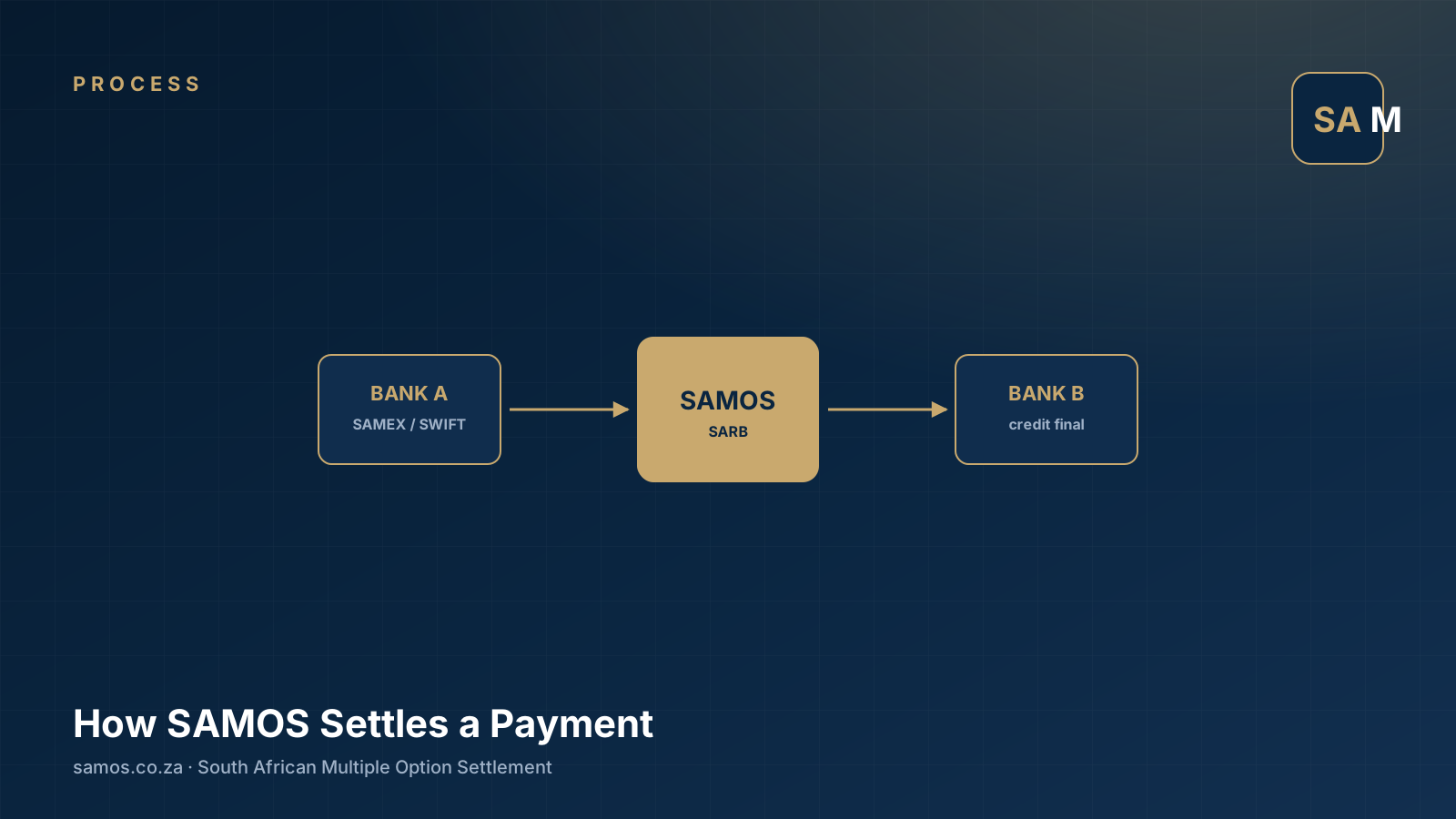
SAMOS went into production on 9 March 1998 as the country's first real-time gross settlement system. From day one it offered RTGS for high-value interbank payments alongside batch settlement for retail clearing outputs. Participants connected through SAMEX, the bespoke front-end, or via SWIFT messaging.
The launch eliminated the multi-day settlement lag for high-value payments and introduced the concept of intraday settlement finality to the South African market.
First decade: 1998–2008
During its first decade, SAMOS settled the cash legs of an increasing range of instruments. STRATE — the central securities depository, established in 1999 — wired its delivery-versus-payment leg into SAMOS, anchoring securities settlement in central-bank money. BankservAfrica's clearing house outputs (EFT credits, EFT debits, ATM, card switching) began settling against SAMOS accounts.
Cross-border linkages followed. The rand became a CLS-eligible currency in 2004, with the rand leg of FX trades settling via SAMOS into CLS Bank. The SADC-RTGS system, originally known as SIRESS, went live in 2013 with SAMOS providing the rand settlement layer for the regional rail.
Modernisation: 2015 to today
From the mid-2010s, SARB began publishing the National Payment System Vision documents — Vision 2025 first, then Vision 2030+ — laying out a programme of work to modernise the entire ecosystem. The Payments Ecosystem Modernisation (PEM) Programme became the umbrella for this work, with three pillars relevant to SAMOS: ISO 20022 migration, RTGS renewal, and a future shared infrastructure now referred to as the National Payments Utility.
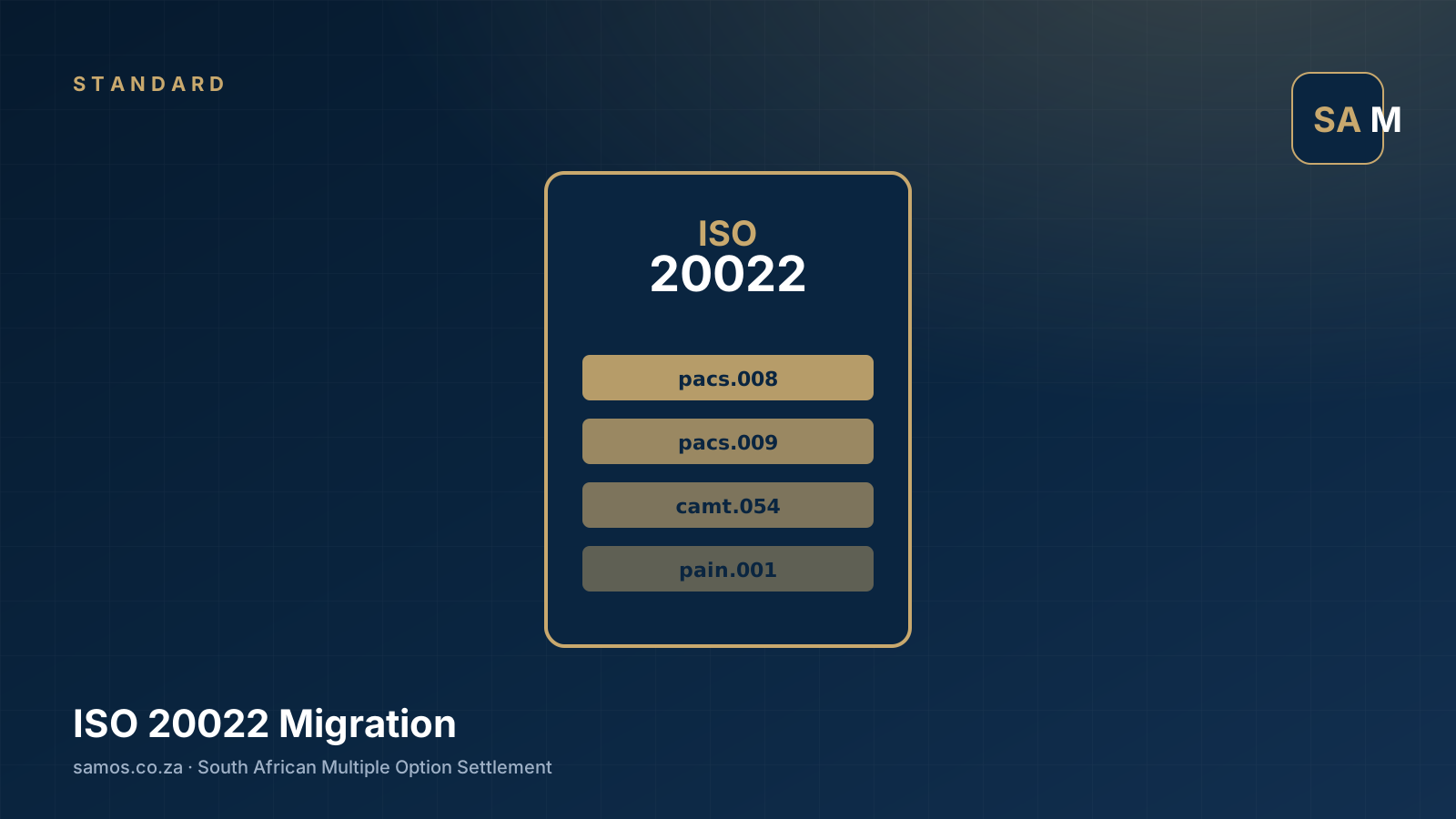
ISO 20022 messaging is at the heart of the renewal: richer data, structured remittance information, and global interoperability. The migration runs on the SARB's published roadmap and is being coordinated with BankservAfrica, PASA, and industry working groups.
Key SAMOS milestones at a glance
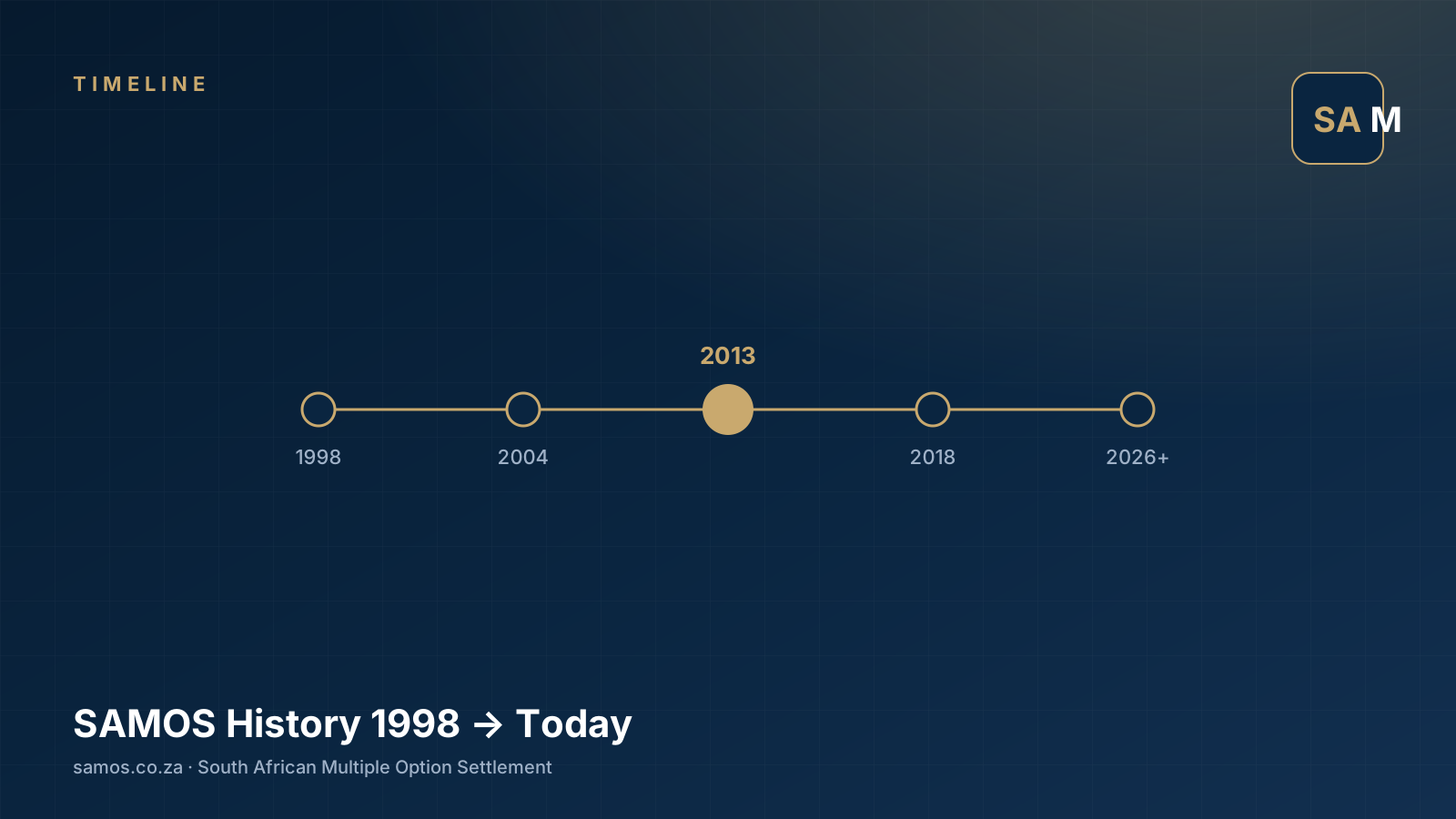
- 1998: SAMOS launches (9 March).
- 1999: STRATE established; DvP via SAMOS.
- 2004: Rand becomes CLS-eligible; FX legs route via SAMOS.
- 2013: SADC-RTGS (SIRESS) goes live; rand layer via SAMOS.
- 2018: Vision 2025 published.
- 2023: Vision 2030+ replaces Vision 2025 as the SARB's strategic framework.
- 2024+: ISO 20022 migration and RTGS renewal under PEM.
TL;DR
- Launched 9 March 1998 as South Africa's first RTGS system.
- Replaced net-settlement arrangements; introduced same-day settlement finality.
- Now central to STRATE securities settlement, SADC-RTGS, and CLS for the rand.
- Being modernised under SARB's PEM Programme with ISO 20022 at the core.
Frequently asked questions
When was SAMOS launched?
SAMOS went live on 9 March 1998.
What did SAMOS replace?
Earlier paper-based and net-settlement arrangements between South African banks.
When did the rand become CLS-eligible?
In 2004, with the rand leg of FX trades settling through SAMOS into CLS Bank.
Is SAMOS being replaced?
Not retired in the short term — it is being modernised under the SARB's PEM Programme and RTGS renewal initiative.
See also from our Comparison silo: DebiCheck and the SAMOS Connection and Real-Time Clearing (RTC) in South Africa Explained. For the foundations, return to the SAMOS homepage or browse the full Knowledge Hub.