Quick answer
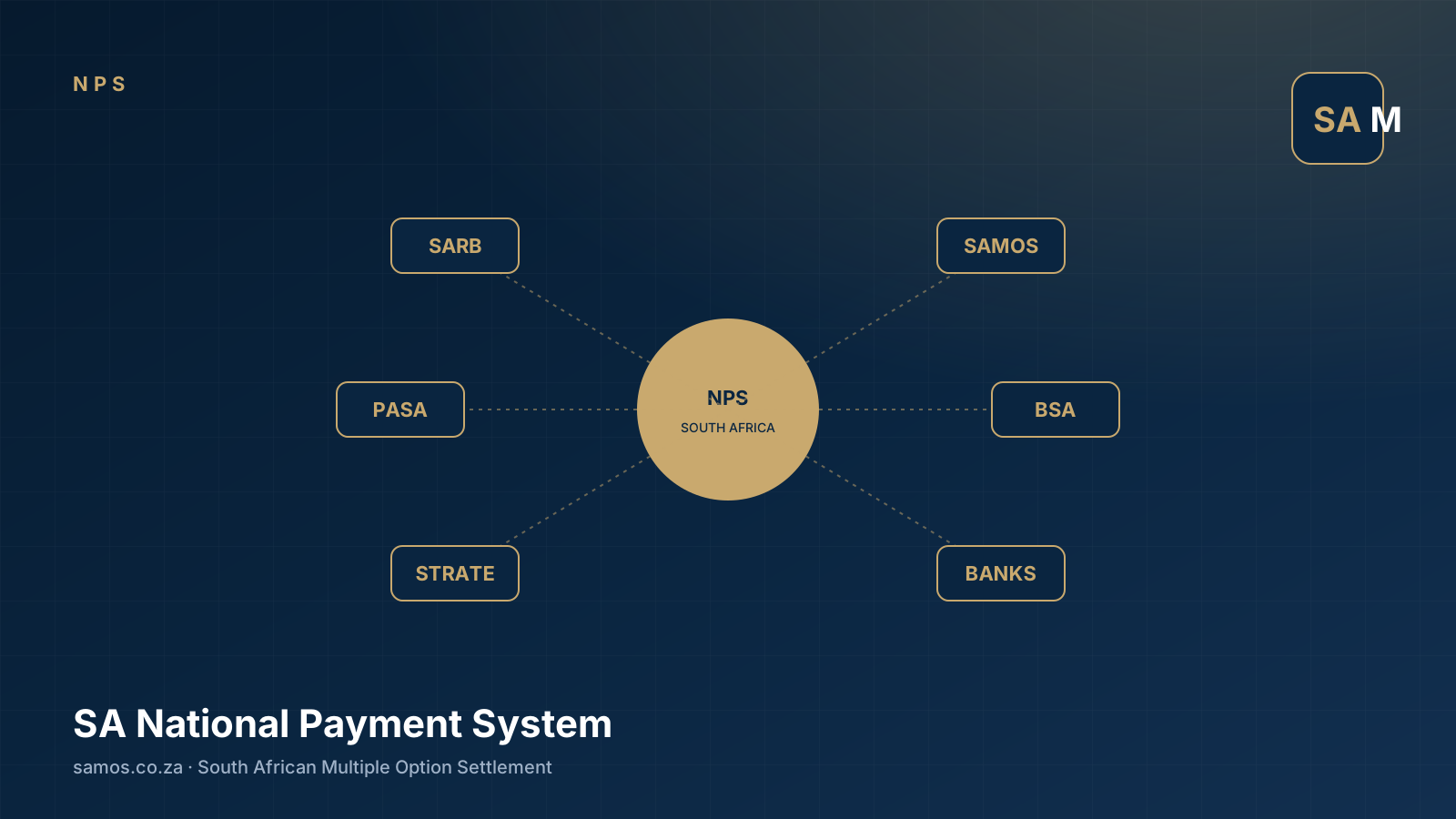
South Africa's National Payment System (NPS) is the collective infrastructure for moving money between consumers, businesses, banks, and the central bank. It is regulated by SARB under the NPS Act, operated by SARB (settlement) and BankservAfrica (clearing), and governed by PASA on the industry side. Every payment instrument — EFT, card, PayShap, securities cash legs — ultimately settles in SAMOS.
What the NPS is
The National Payment System is the umbrella term for all the rules, institutions, and infrastructure that move value between economic participants in South Africa. It covers everything from the SARB's settlement system down to the card you tap at a coffee shop.
The four layers of the NPS
- Regulation. SARB regulates the NPS under the National Payment System Act, 1998.
- Settlement. SAMOS, operated by SARB, settles all interbank obligations.
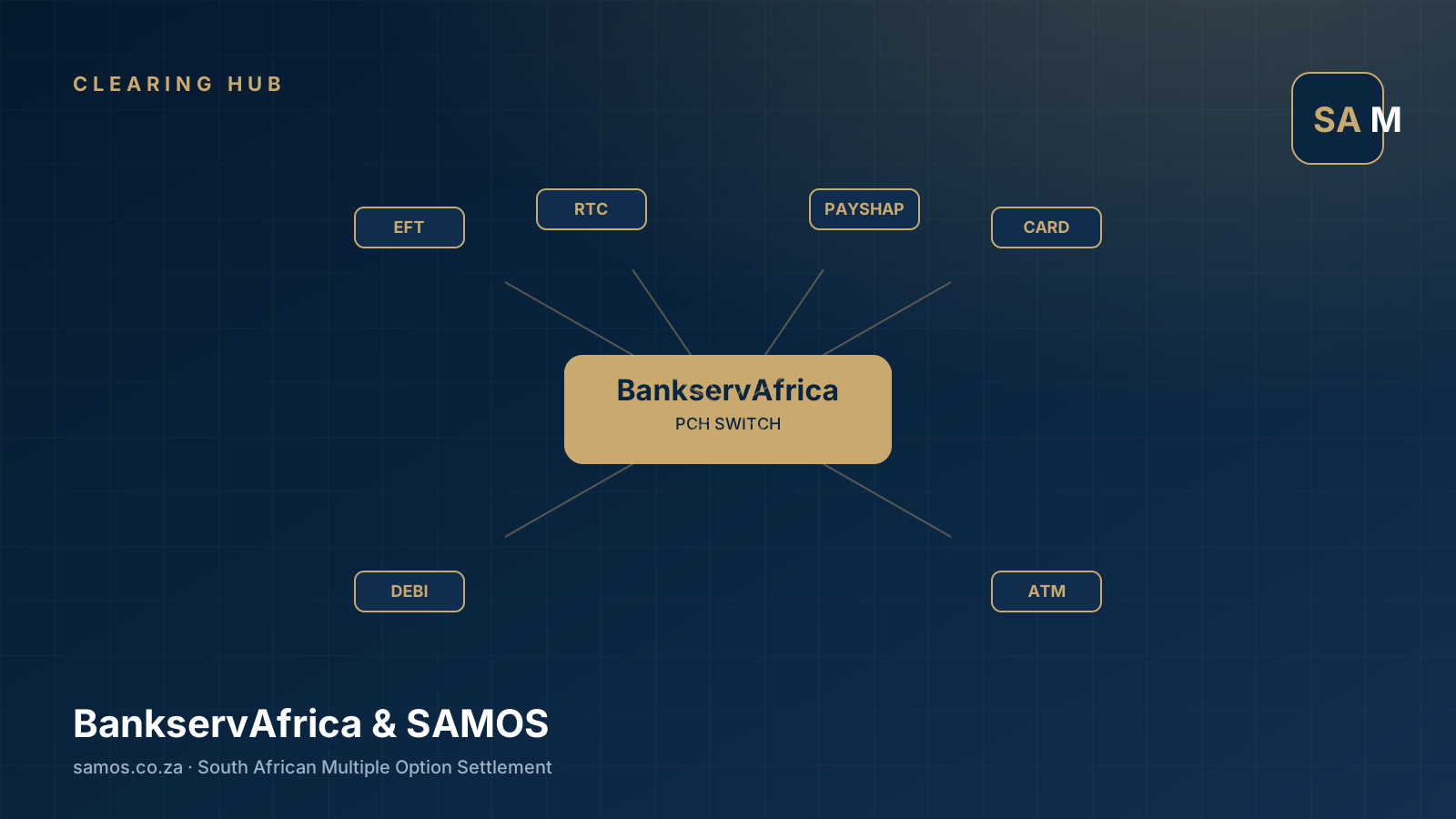
- Clearing. BankservAfrica runs the major payment clearing houses (EFT, DebiCheck, RTC, PayShap, card switching).
- Issuance and acceptance. Settlement banks, payment service providers, merchants, and consumers sit at the customer-facing edge.
Key players in the NPS
- SARB — regulator and operator of SAMOS.
- PASA — industry association coordinating rules among participants. See PASA Explained.
- BankservAfrica — the dominant clearing house. See BankservAfrica & SAMOS.
- STRATE — securities settlement.
- Settlement banks — direct participants in SAMOS.
- Sponsored participants — non-banks accessing settlement via sponsoring banks.
How a payment moves through the NPS
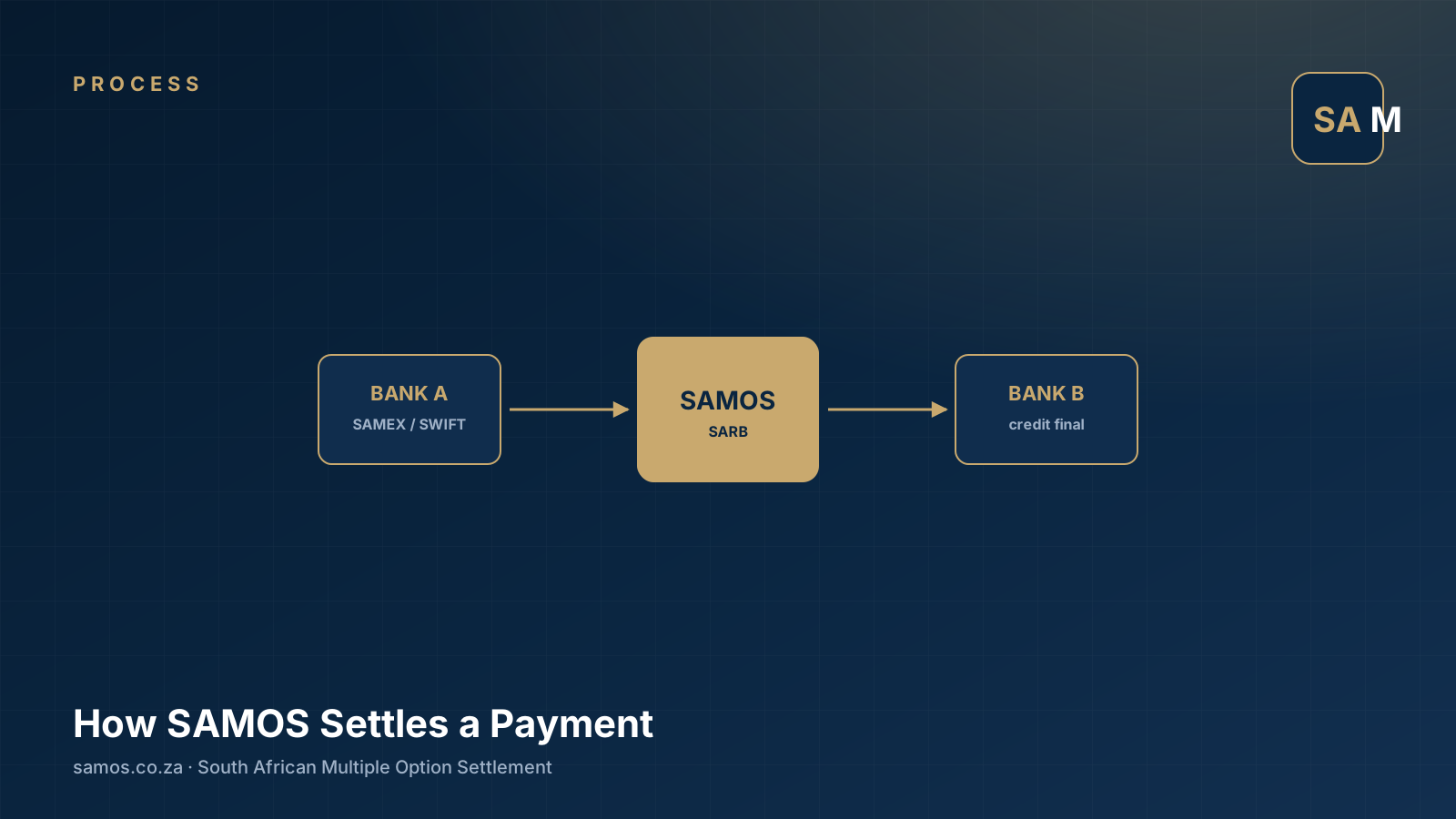
Take a salary EFT: the employer's bank batches the instruction, sends it to BankservAfrica's EFT clearing house, which nets multilateral positions and submits them to SAMOS at a scheduled window. SAMOS settles the net positions across the participants' settlement accounts at SARB. The employee's bank credits the employee's account once the settlement leg is final.
For PayShap, the same chain applies but the clearing happens in seconds and the underlying settlement happens at scheduled windows that occur frequently enough — including over weekends — to maintain near-real-time customer experience.
Where the NPS is heading
The SARB's Vision 2030+ framework and the PEM Programme are reshaping the NPS: ISO 20022 messaging, RTGS renewal, broader direct access for non-banks, and the National Payments Utility concept for shared infrastructure. See our Vision 2025 vs 2030+ guide.
TL;DR
- The NPS is regulated by SARB, settled in SAMOS, cleared mainly by BankservAfrica, governed in part by PASA.
- Every payment instrument in SA ultimately settles in SAMOS.
- Vision 2030+ and the PEM Programme are modernising every layer.
Frequently asked questions
What law governs the NPS?
The National Payment System Act, 1998, with SARB as regulator.
Who clears retail payments in South Africa?
Primarily BankservAfrica, through its payment clearing houses (EFT, DebiCheck, RTC, PayShap, card).
How does SAMOS fit into the NPS?
It is the central-bank-operated settlement layer that anchors every other rail.
What is Vision 2030+?
SARB's strategic framework for modernising the NPS, replacing the earlier Vision 2025.
See also from our Comparison silo: Continuous Linked Settlement (CLS) & the South African Rand and How SAMOS Works: Step-by-Step Settlement Process. For the foundations, return to the SAMOS homepage or browse the full Knowledge Hub.