Quick answer
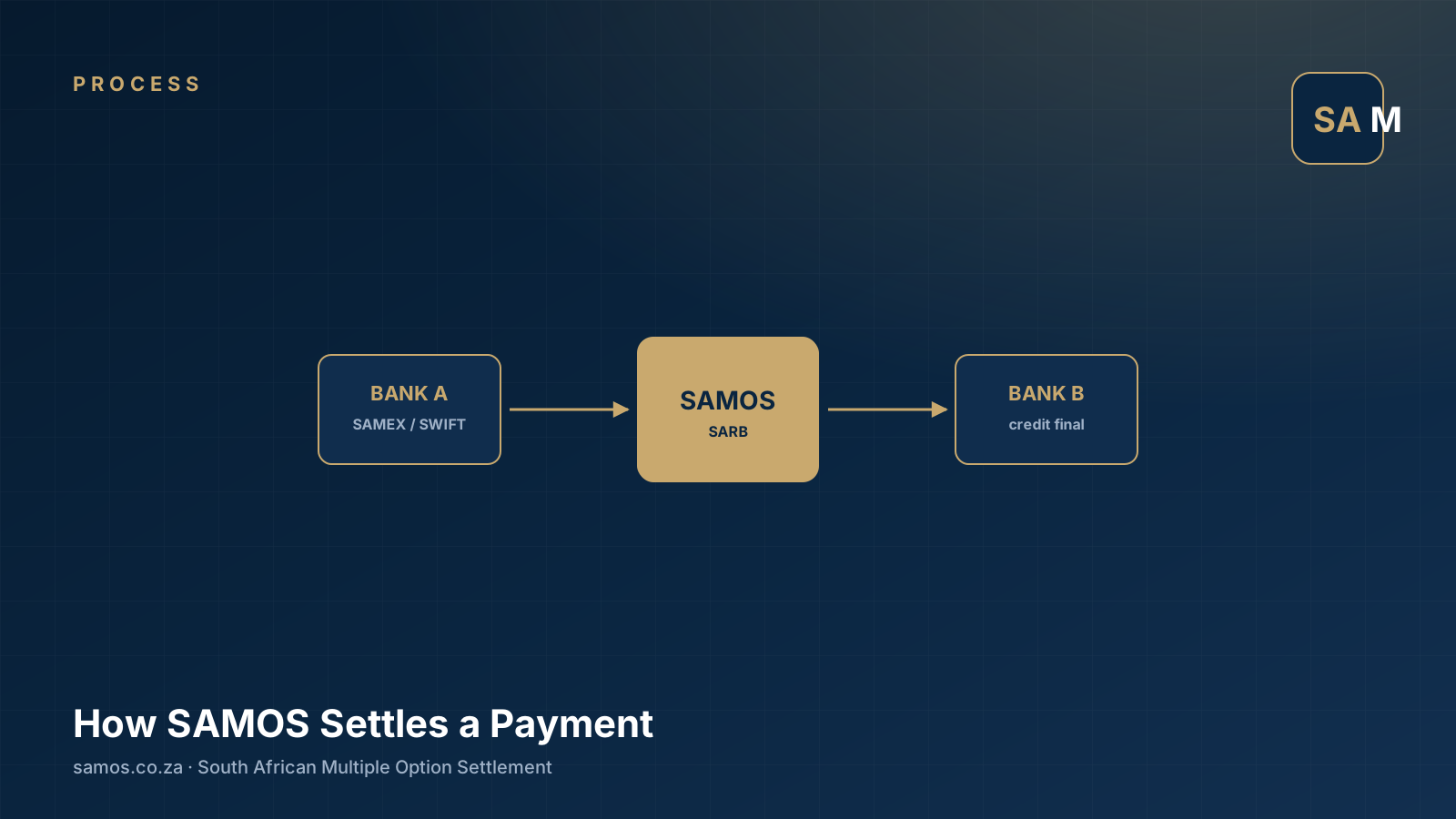
STRATE — Share TRAnsactions Totally Electronic — is South Africa's central securities depository. When a bond, equity, or money-market instrument changes hands, STRATE moves the securities while SAMOS moves the cash. The two settlements are linked so that delivery and payment happen atomically (delivery-versus-payment, or DvP).
What STRATE is
STRATE is the central securities depository for South Africa, established in the late 1990s to dematerialise the South African equity market. It maintains electronic records of ownership for equities, bonds, and money-market instruments, and operates the settlement of trades in those instruments.
Delivery-versus-payment with SAMOS
For each securities trade, STRATE simultaneously transfers the securities between sellers' and buyers' accounts while SAMOS settles the corresponding cash leg between the same parties' settlement banks. The atomicity of the two postings — they succeed or fail together — eliminates principal risk: a seller never gives up securities without receiving cash.
Settlement cycles
South African equity settlement runs on a T+3 cycle in most cases, with bonds at T+0/T+1 depending on instrument. The cash leg flows through SAMOS at the corresponding window.
Where STRATE fits in the NPS
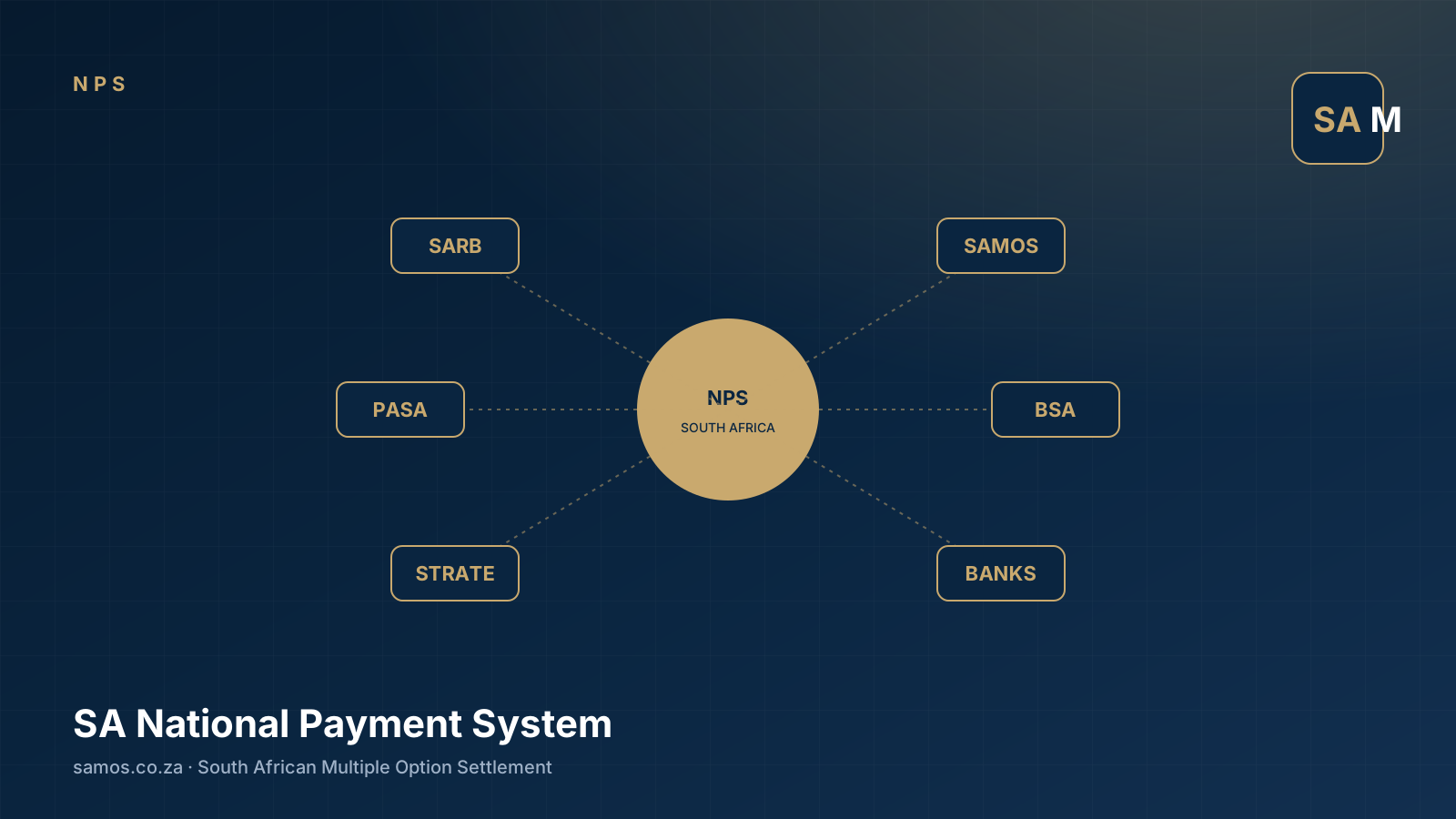
STRATE is regulated under the Financial Markets Act and overseen by the Financial Sector Conduct Authority and the Prudential Authority. Its link to SAMOS makes it part of the broader NPS infrastructure.
TL;DR
- STRATE is South Africa's central securities depository.
- Securities leg in STRATE settles atomically with the cash leg in SAMOS.
- Delivery-versus-payment eliminates principal risk.
- Equities typically T+3; bonds T+0 or T+1 depending on instrument.
Frequently asked questions
Does STRATE settle in central-bank money?
Yes — the cash leg of STRATE settlement flows through SAMOS, which posts in central-bank money.
What does STRATE stand for?
Share TRAnsactions Totally Electronic.
Who regulates STRATE?
STRATE is regulated under the Financial Markets Act with oversight from the FSCA and the Prudential Authority.
How does DvP work?
Securities and cash move atomically — either both legs settle or neither does — eliminating principal risk.
See also from our Comparison silo: SADC-RTGS vs SAMOS: Regional vs Domestic Settlement and SAMOS Charges & Participation Fees Breakdown. For the foundations, return to the SAMOS homepage or browse the full Knowledge Hub.