Quick answer
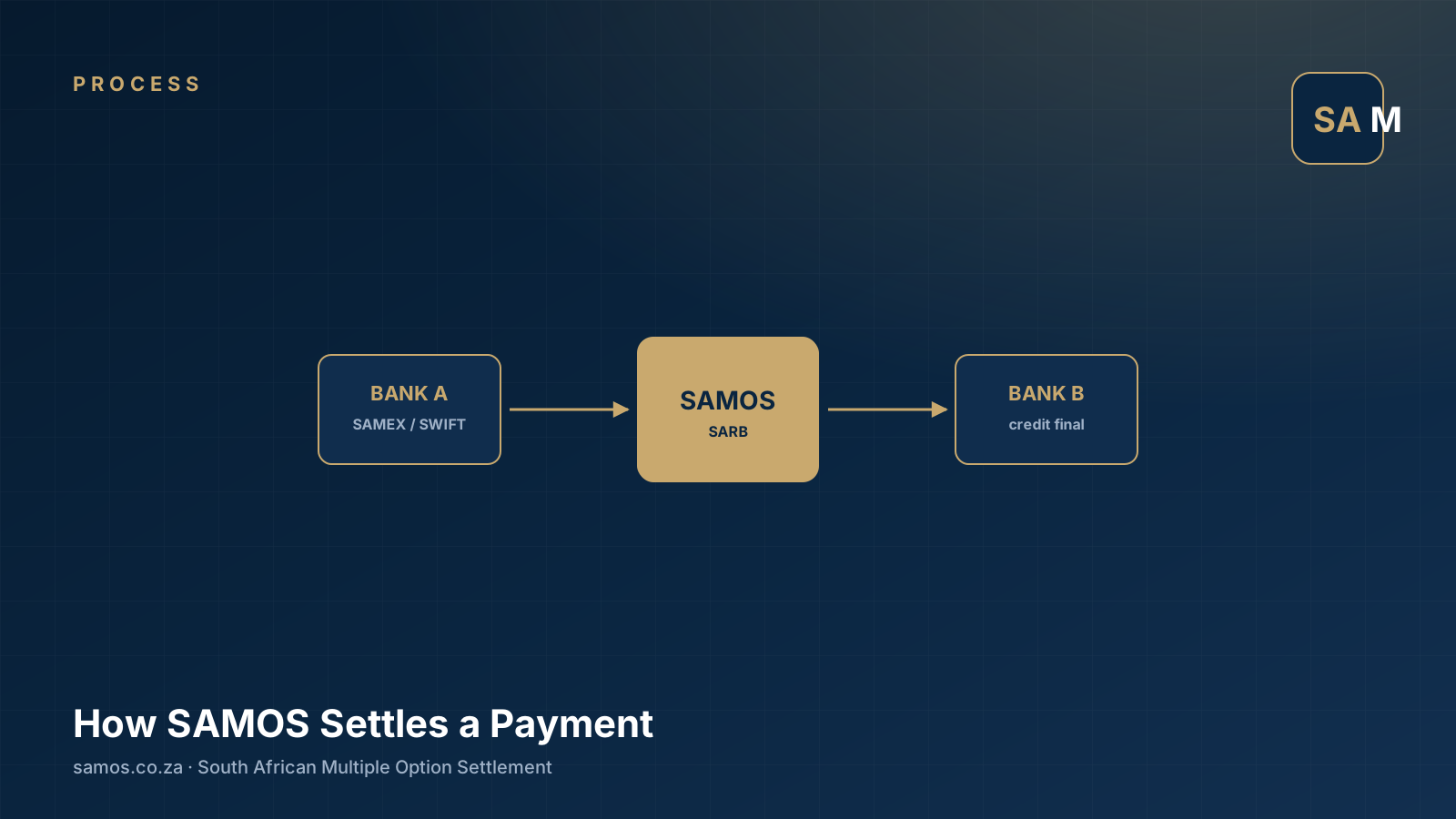
SAMOS settles each eligible interbank payment individually, in real time, in central-bank money. A participating bank submits an instruction via SAMEX or SWIFT, SARB's system validates it, debits the sender's settlement account, credits the receiver, and sends back a confirmation — all in seconds, with finality the moment the credit lands.
What SAMOS is settling
SAMOS settles obligations between South African settlement participants. Those obligations can take three forms: individual high-value payments (treated under RTGS), net positions from retail clearing houses operated by BankservAfrica (batch settlement), and the cash leg of securities trades cleared through STRATE.
This article walks through the most common case: a single high-value interbank payment using the RTGS path.
Step 1 — Instruction in the bank's core system
A customer at Bank A initiates a high-value transfer to a customer at Bank B. Bank A's core banking system creates a settlement instruction. For RTGS-eligible amounts (above the threshold the bank routes for SAMOS, or wherever the customer requests it explicitly), the instruction is formatted for SAMOS and queued for transmission.
Step 2 — Transmission via SAMEX or SWIFT
Bank A transmits the instruction to SAMOS through one of two channels: SAMEX, SARB's bespoke participant front-end, or SWIFT messaging. Historically these were MT-series messages (MT202, MT103); under ISO 20022, the equivalents are pacs.009 and pacs.008.
The message includes the participants involved, the amount, the value date, and (under ISO 20022) richer remittance information.
Step 3 — Validation and queueing
SAMOS authenticates the message, validates its format, and checks that Bank A has sufficient available balance on its settlement account at SARB. If the balance is sufficient, the instruction proceeds immediately. If not, it enters a centralised queue and is released as soon as liquidity becomes available — for example, when an incoming payment credits Bank A.
Step 4 — Settlement in central-bank money
SAMOS debits Bank A's settlement account at SARB and simultaneously credits Bank B's account. The accounts are denominated in central-bank money, so the value transfer carries no credit risk. The two postings are atomic — they succeed or fail together.
Step 5 — Confirmation and finality
SAMOS sends a confirmation back to both banks. Bank A's outgoing instruction is acknowledged; Bank B receives a credit confirmation it can act on immediately. The credit is final and irrevocable — a property anchored in the National Payment System Act. Bank B can release funds to its customer without waiting for any further settlement cycle.
What about batch and securities flows?
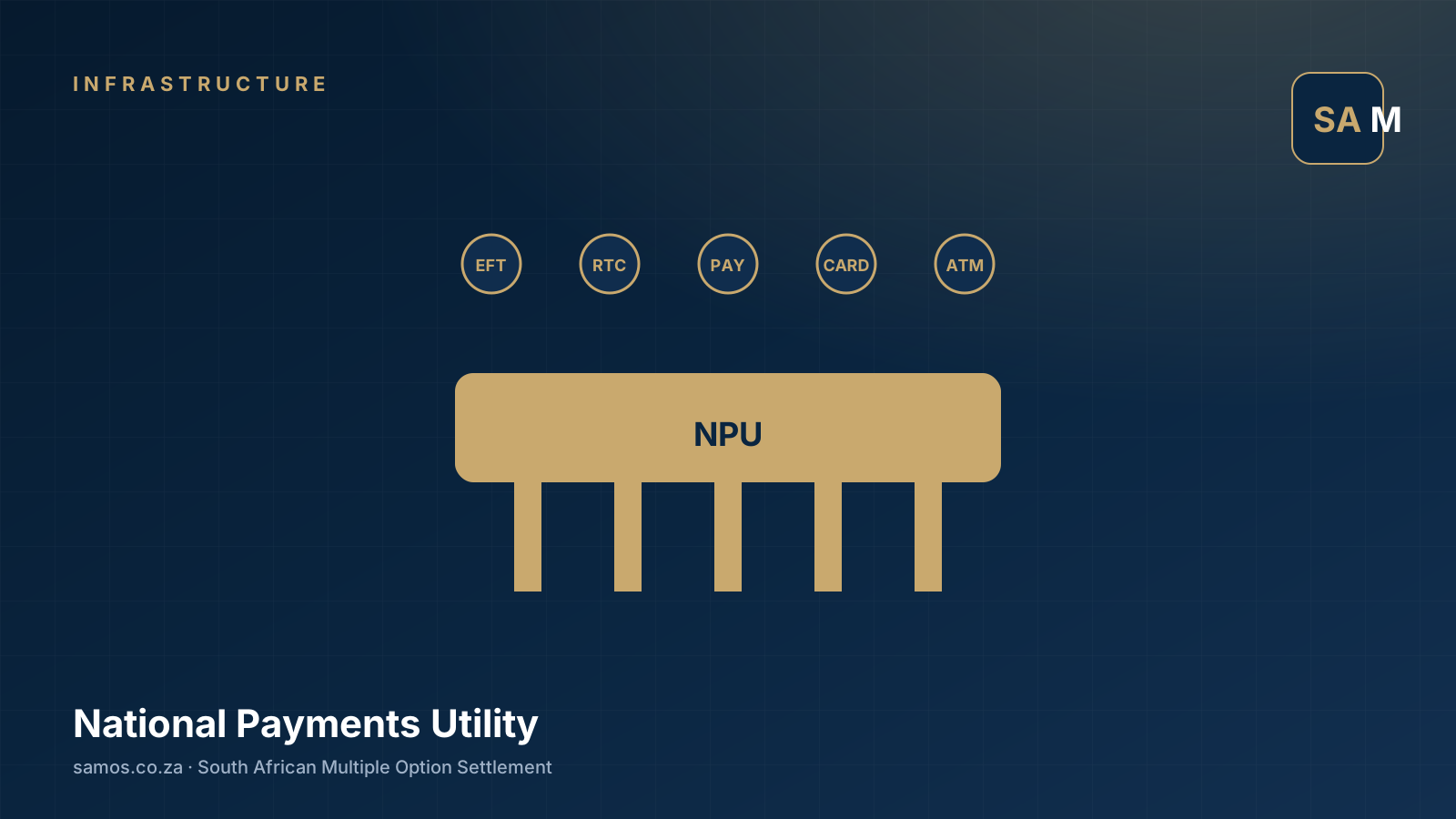
For retail PCH outputs (EFT, DebiCheck, PayShap), BankservAfrica computes net positions at agreed settlement windows and submits a single multilateral net obligation to SAMOS. SAMOS settles those positions across participant accounts at the scheduled time. For STRATE, the cash leg of an equity or bond trade settles in SAMOS at the same moment the securities leg settles in STRATE — the classic delivery-versus-payment pattern.
TL;DR
- RTGS payments settle individually, gross, in central-bank money, in seconds.
- Messages flow via SAMEX or SWIFT (MT-series legacy, ISO 20022 pacs messages going forward).
- Settlement is final and irrevocable the moment the credit lands.
- Retail PCH and STRATE flows use the same SAMOS accounts but via batch or DvP windows.
Frequently asked questions
How fast is a SAMOS payment?
Eligible RTGS payments typically settle in seconds, subject to liquidity on the sending bank's settlement account.
Can a SAMOS payment be reversed?
No. Once SAMOS credits the receiving bank, the payment is final and irrevocable. Corrections require a fresh, opposite payment between the parties.
What happens if a bank runs out of liquidity?
Its outgoing payments queue inside SAMOS until incoming receipts top up the account or the bank funds its settlement account from its operational account.
Is SAMOS only for very large payments?
RTGS lanes typically carry high-value, time-critical payments, but the platform also settles batch retail outputs and securities. The threshold for RTGS routing is set by each participant bank.
See also from our Modernization silo: National Payments Utility: South Africa's New Infrastructure and STRATE Settlement: Securities Settlement in SAMOS. For the foundations, return to the SAMOS homepage or browse the full Knowledge Hub.