Quick answer
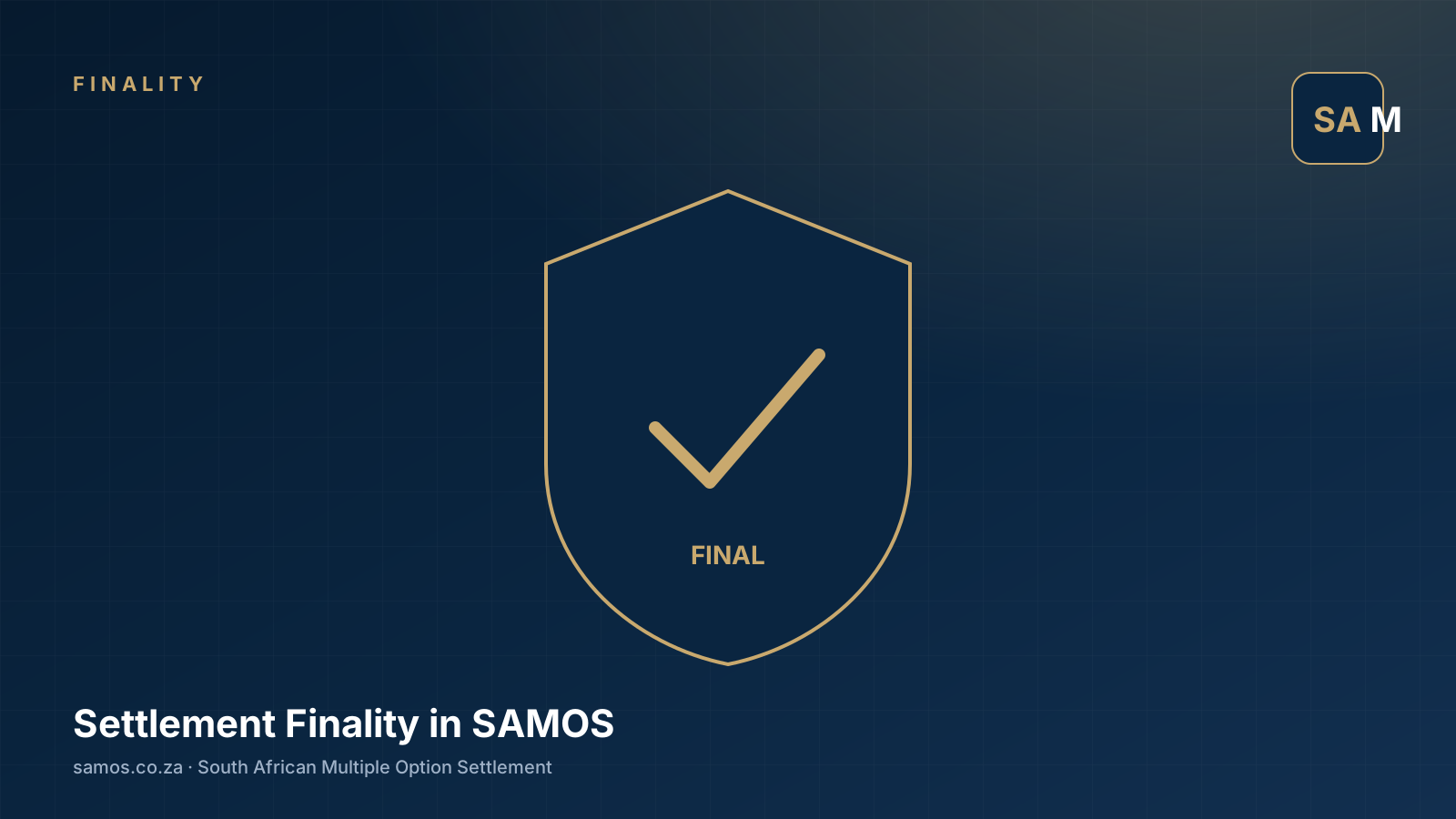
Settlement finality means that once SAMOS credits a participant's account, the credit cannot be reversed, unwound, or clawed back by an insolvency administrator. The protection is anchored in South Africa's National Payment System Act, reinforced by the SAMOS rule book, and grounded in the use of central-bank money as the settlement asset.
What settlement finality means
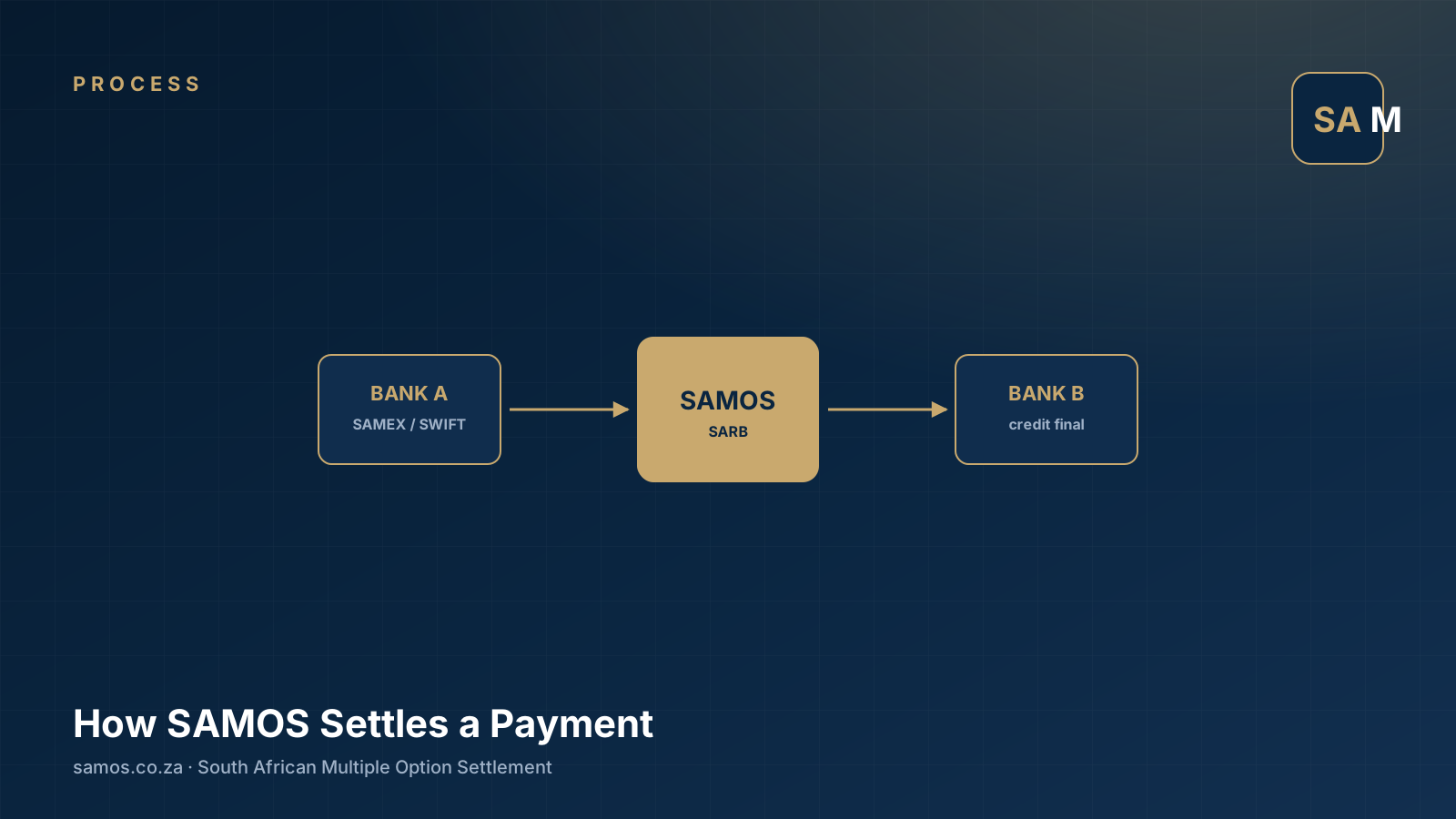
Settlement finality is a legal and operational property: the moment a payment settles in SAMOS, that settlement is treated as final, irrevocable, and unconditional. The receiving bank can act on the credit immediately, releasing funds to its customer or using them to discharge other obligations. The credit cannot be unwound later — for example, if the sending bank subsequently fails.
The legal anchor: the NPS Act
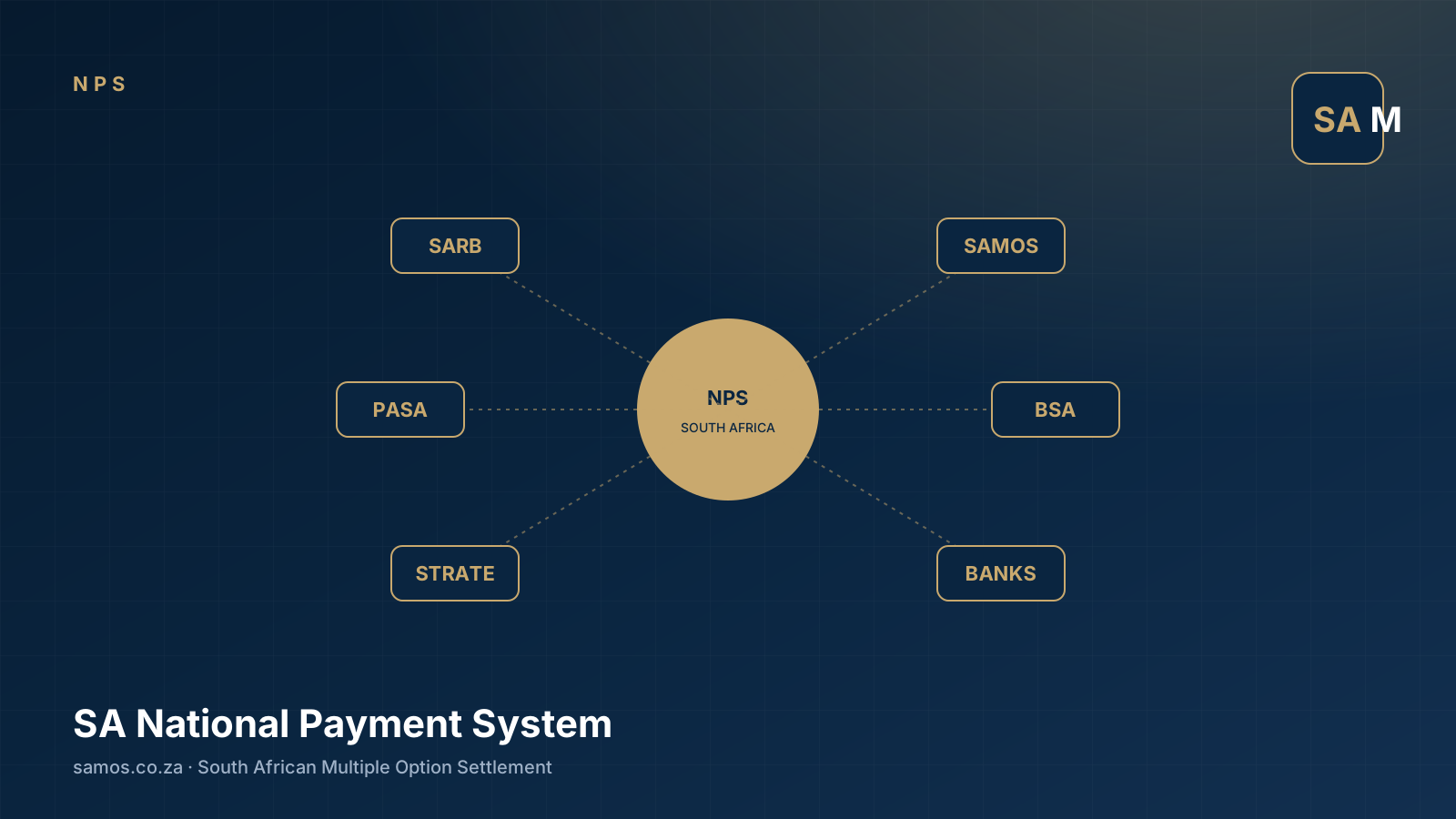
South Africa's National Payment System Act, 1998 underpins SAMOS's finality. The Act provides that settlements through a designated settlement system are not subject to reversal under insolvency law in ways that would undermine systemic stability. Combined with the SARB-issued rules for SAMOS itself, this creates a robust legal foundation that aligns with the CPMI–IOSCO Principles for Financial Market Infrastructures.
Why central-bank money matters
SAMOS settles in central-bank money — claims on SARB itself, recorded on SARB's books. Unlike claims on a commercial bank, claims on the central bank carry no credit risk under normal conditions. That makes the settlement asset the most robust possible foundation for finality.
Why finality matters in practice
Without finality, every receiving bank would have to hold back funds until it was certain the sending bank's payment could not be unwound. That uncertainty would slow the entire payment system. Finality is what lets retail rails, securities settlement, and FX rails (via CLS) deliver definitive end-states quickly.
TL;DR
- Settlement finality = once SAMOS credits a receiving bank, the credit is irrevocable.
- Anchored in the National Payment System Act, the SAMOS rule book, and central-bank money.
- Aligns with CPMI–IOSCO Principles for Financial Market Infrastructures.
- Underwrites the speed of every downstream retail and securities rail.
Frequently asked questions
Can a SAMOS credit ever be reversed?
Not by the system. A receiving bank that wants to return funds initiates a new, opposite payment. The original credit stays final.
What law makes SAMOS settlement final?
South Africa's National Payment System Act, 1998, reinforced by the SAMOS rule book.
What if the sending bank fails after settlement?
The credit to the receiving bank remains final. Insolvency does not unwind completed SAMOS settlements.
Does finality apply to batch settlements too?
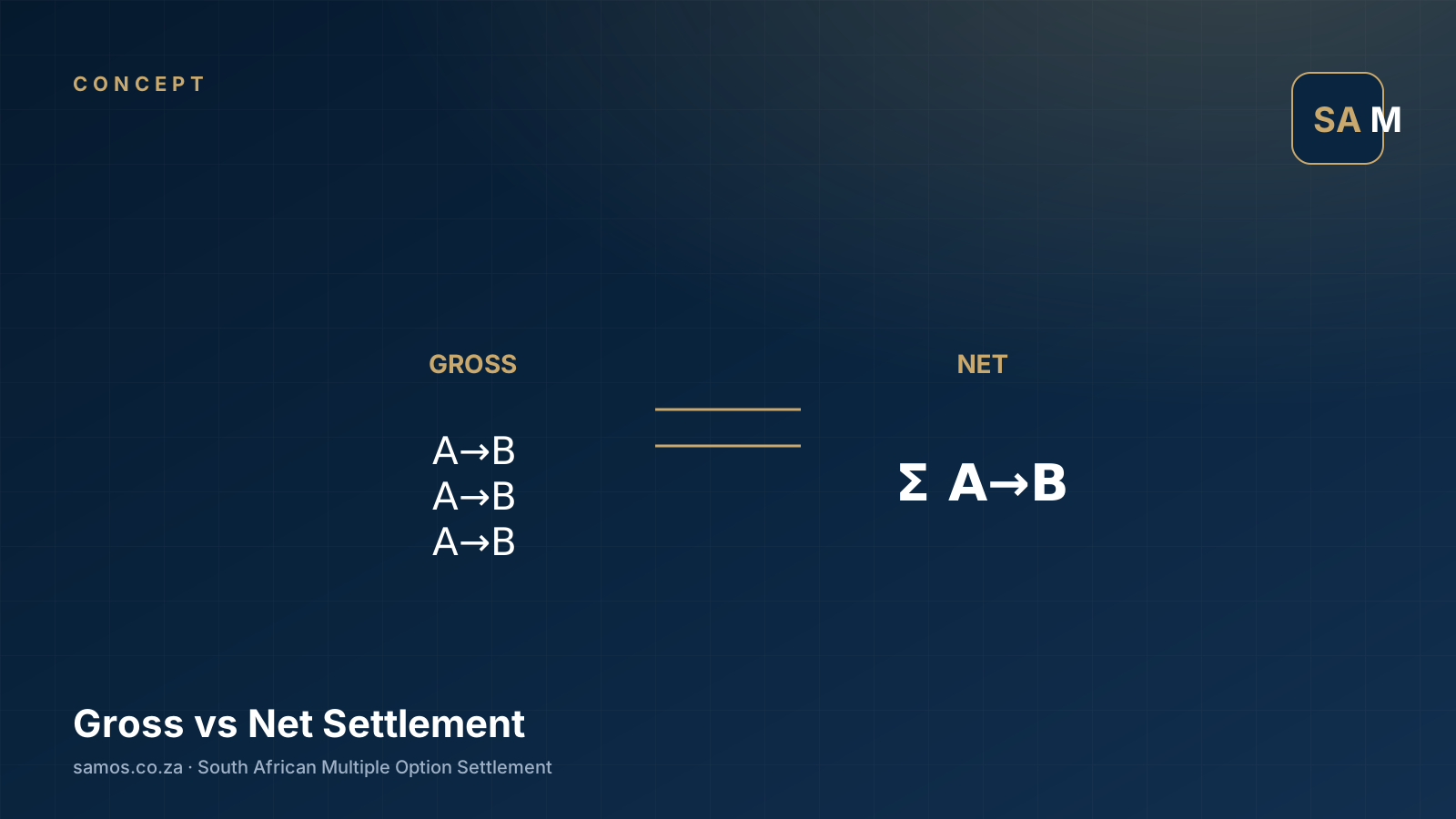
Yes — once the net settlement leg posts in SAMOS, it is final, even though the underlying customer-level positions were netted earlier in a clearing house.
See also from our Modernization silo: ISO 20022 in South Africa: SAMOS Migration Story and PASA: Payment Association of South Africa — Complete Guide. For the foundations, return to the SAMOS homepage or browse the full Knowledge Hub.