Quick answer
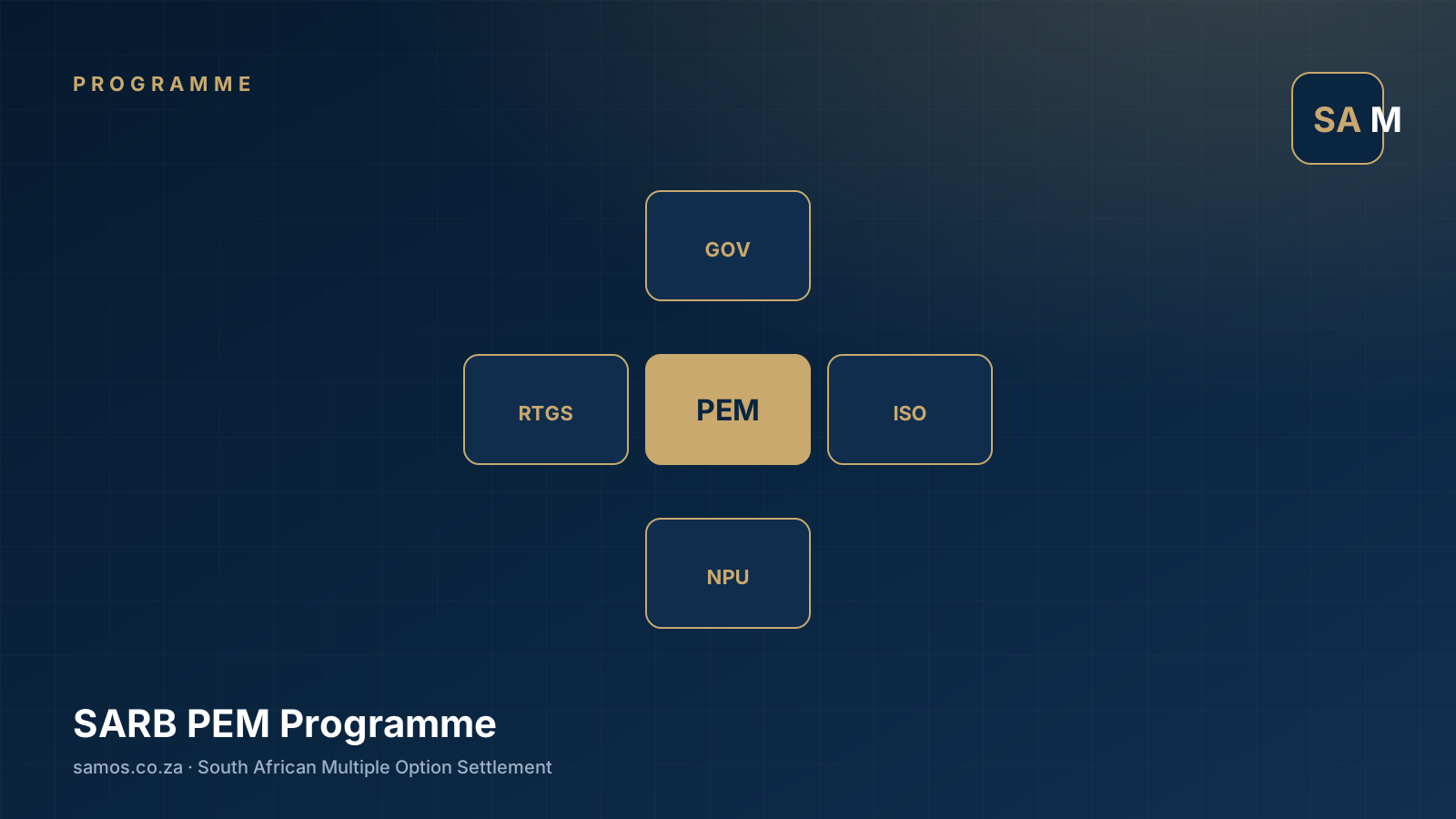
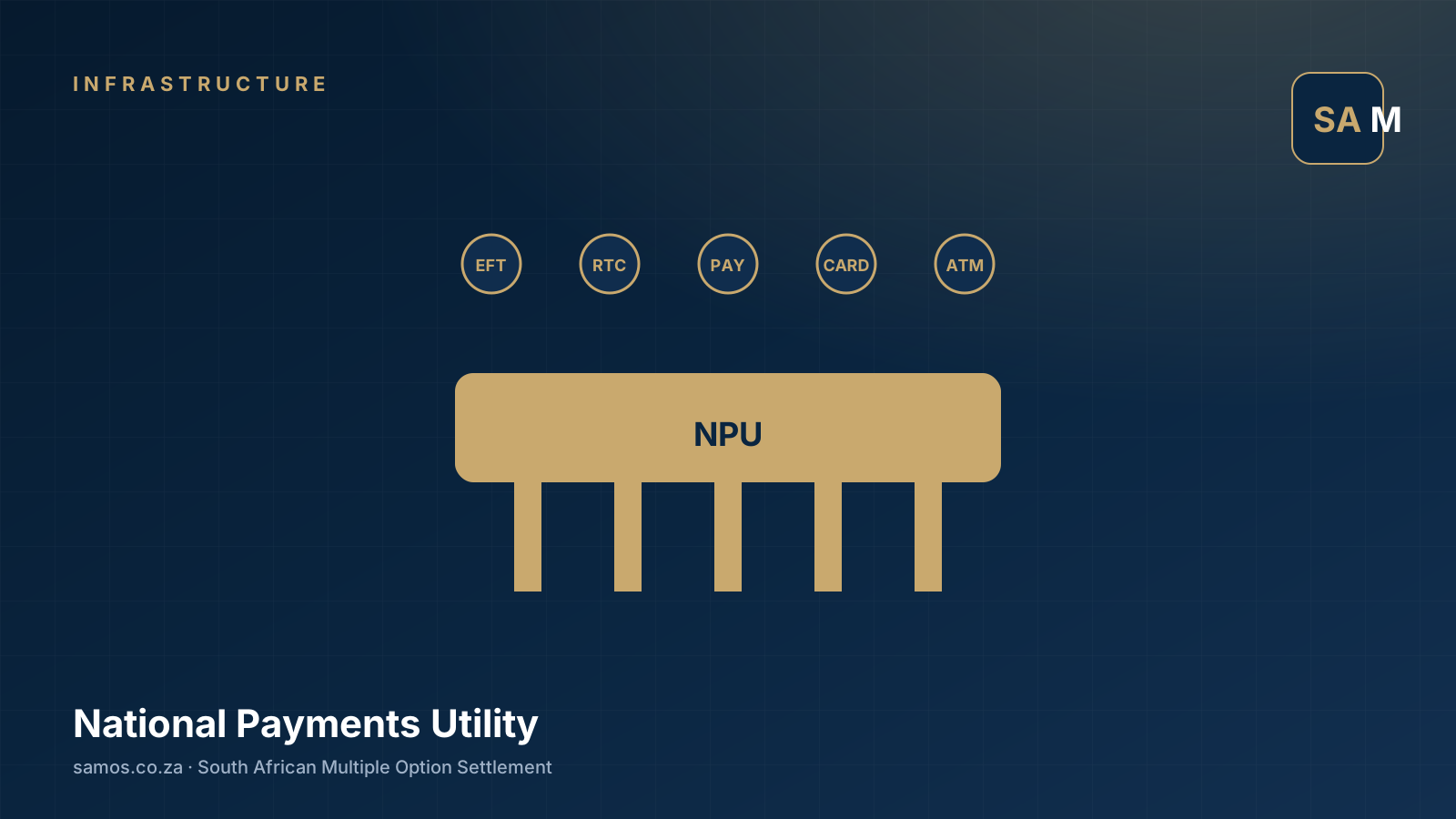
The National Payments Utility (NPU) is a proposed shared infrastructure concept under Vision 2030+ and the PEM Programme. The idea: consolidate elements of clearing and switching infrastructure into a national utility with broader access, neutral governance, and modernised technology. Scope, governance, and ownership are still being designed.
The NPU concept
The NPU is the SARB's proposed vehicle for shared, modern payments infrastructure that can serve direct settlement participants and a broader set of payment service providers on equal terms. It is positioned as an enabler of competition, innovation, and financial inclusion.
Why the SARB wants an NPU
- Reduce duplicative infrastructure across the industry.
- Open access to qualifying non-banks under controlled rules.
- Anchor ISO 20022 messaging on a single, modern platform.
- Strengthen resilience and governance.
Open questions
- Ownership and governance. Public utility, industry-owned, or hybrid?
- Scope. Which clearing functions become NPU functions, and which stay with existing operators?
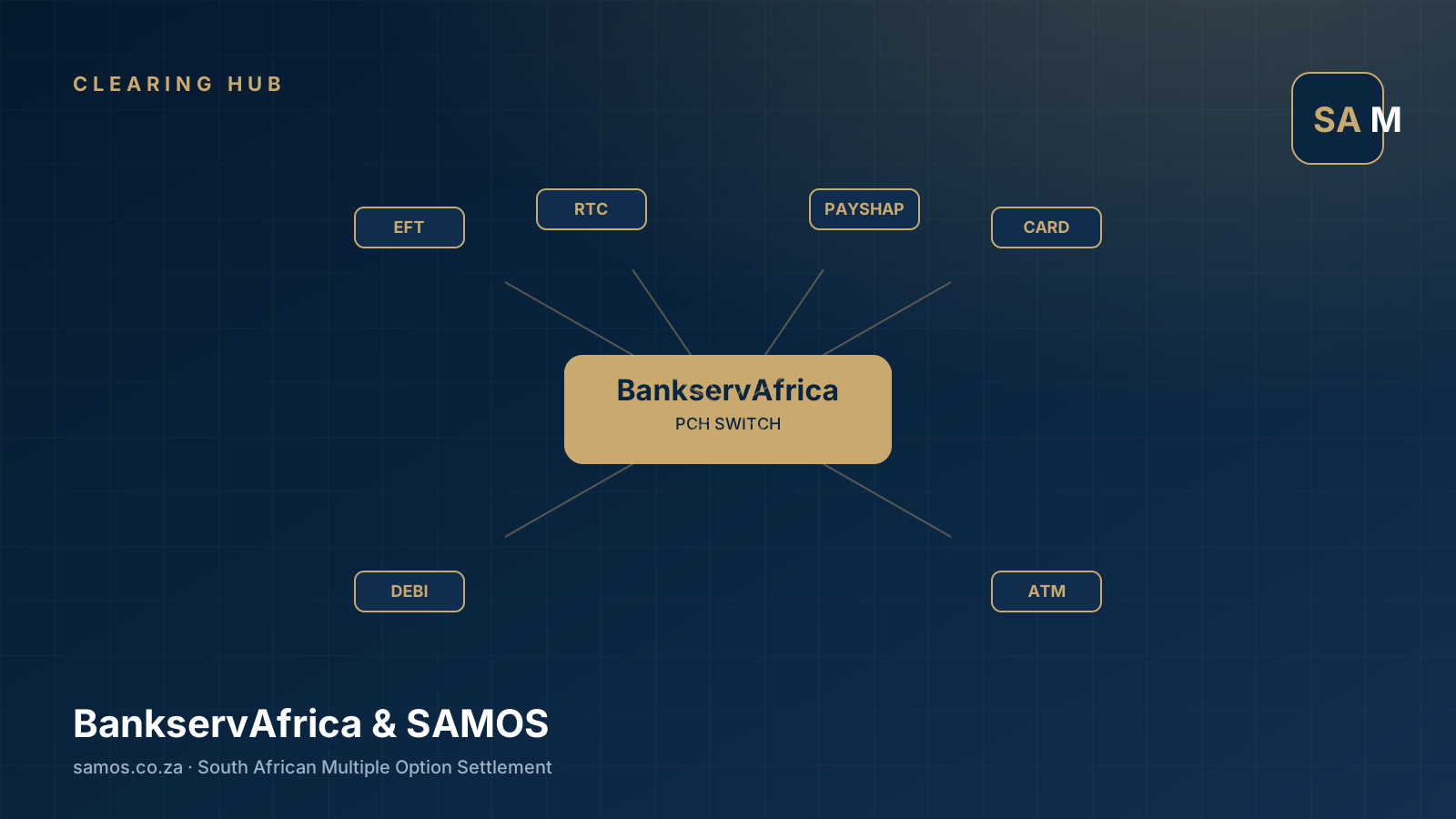
- Operator. Will BankservAfrica be the operator, or will a new entity be formed?
- Timeline. Multi-year design and build, with cutover details still under discussion.
TL;DR
- NPU = proposed shared payments infrastructure under PEM.
- Aims to broaden access, reduce duplication, modernise technology.
- Scope, governance, and operator decisions still under consultation.
- Multi-year programme with active industry engagement.
Frequently asked questions
Is the NPU operational?
Not yet — it is in design under the PEM Programme.
Will the NPU replace SAMOS?
No. SAMOS is the settlement layer; the NPU is positioned around clearing and switching.
Will BankservAfrica disappear?
Not necessarily. Its role under the NPU model is one of the open design questions.
When will the NPU launch?
Multi-year build; specific timelines remain under industry consultation.
See also from our Comparison silo: PayShap vs RTC vs EFT: Choosing the Right Payment Method and Clearing vs Settlement: What's the Difference?. For the foundations, return to the SAMOS homepage or browse the full Knowledge Hub.