Fundamentals
What Does SAMOS Stand For? Full Form & Meaning
Unpacking the acronym, why each word matters, and how the “multiple option” part shows up in practice.
Read articleThe independent guide to the real-time gross settlement (RTGS) platform that sits at the heart of South Africa's National Payment System. Built for finance students, treasury professionals, fintech teams, and curious readers who want a clear.
SAMOS - the South African Multiple Option Settlement system - is the real-time gross settlement (RTGS) platform operated by the South African Reserve Bank. It has settled high-value, time-critical interbank payments on an irrevocable, pre-funded basis since 9 March 1998 and forms the backbone of South Africa's National Payment System.
SAMOS, short for South African Multiple Option Settlement, is the country's real-time gross settlement system. Each participating bank holds a settlement account at the South African Reserve Bank (SARB), and every interbank obligation eligible for SAMOS is settled individually, in central-bank money, the moment funds are available.
The platform replaced earlier net-settlement arrangements when it went live on 9 March 1998. Today it processes the high-value end of the South African payments market - interbank transfers, the cash legs of securities trades cleared through STRATE, batch outputs from BankservAfrica's clearing houses, and the rand legs of cross-border transactions handled via the SADC-RTGS and CLS.
Because SAMOS settles gross rather than net, it removes settlement risk between banks: once a payment is processed, it is final and irrevocable. That property is what makes SAMOS the foundation on which retail systems such as EFT, DebiCheck, RTC, and PayShap ultimately rest.
Whether it's a salary EFT, a PayShap instant payment, or a corporate treasury transfer, the final leg ultimately clears across SAMOS.
SAMOS settles the high-value, time-critical interbank flows that keep the South African banking system in balance every business day.
By using central-bank money and settling each transaction individually, SAMOS eliminates the credit and liquidity risk between counterparties.
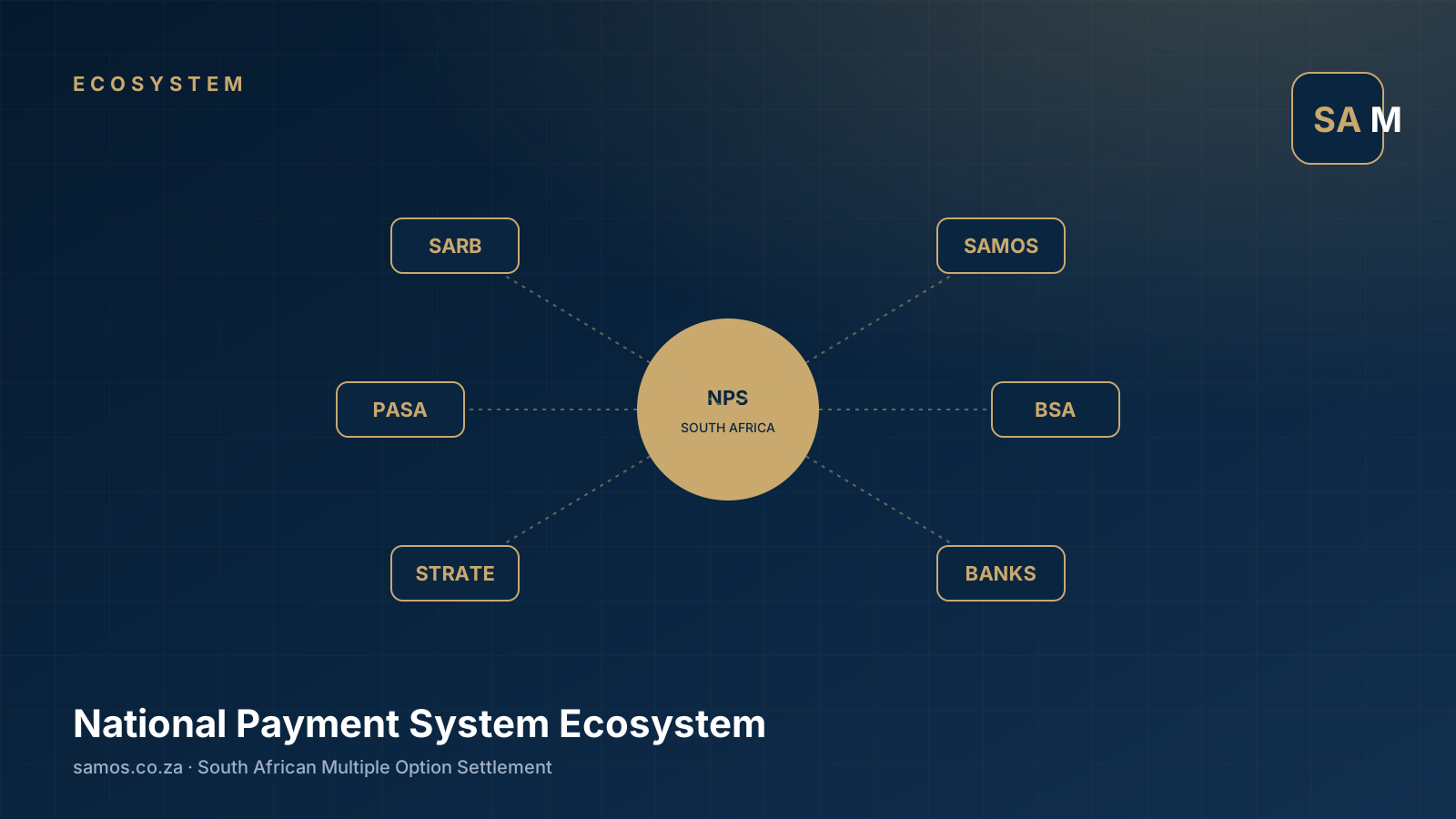
BankservAfrica's clearing houses, STRATE securities settlement, and instant-payment rails all settle their net or gross positions in SAMOS.
SAMOS plugs into the SADC-RTGS for regional payments and CLS for the rand leg of global FX, anchoring the rand in international markets.
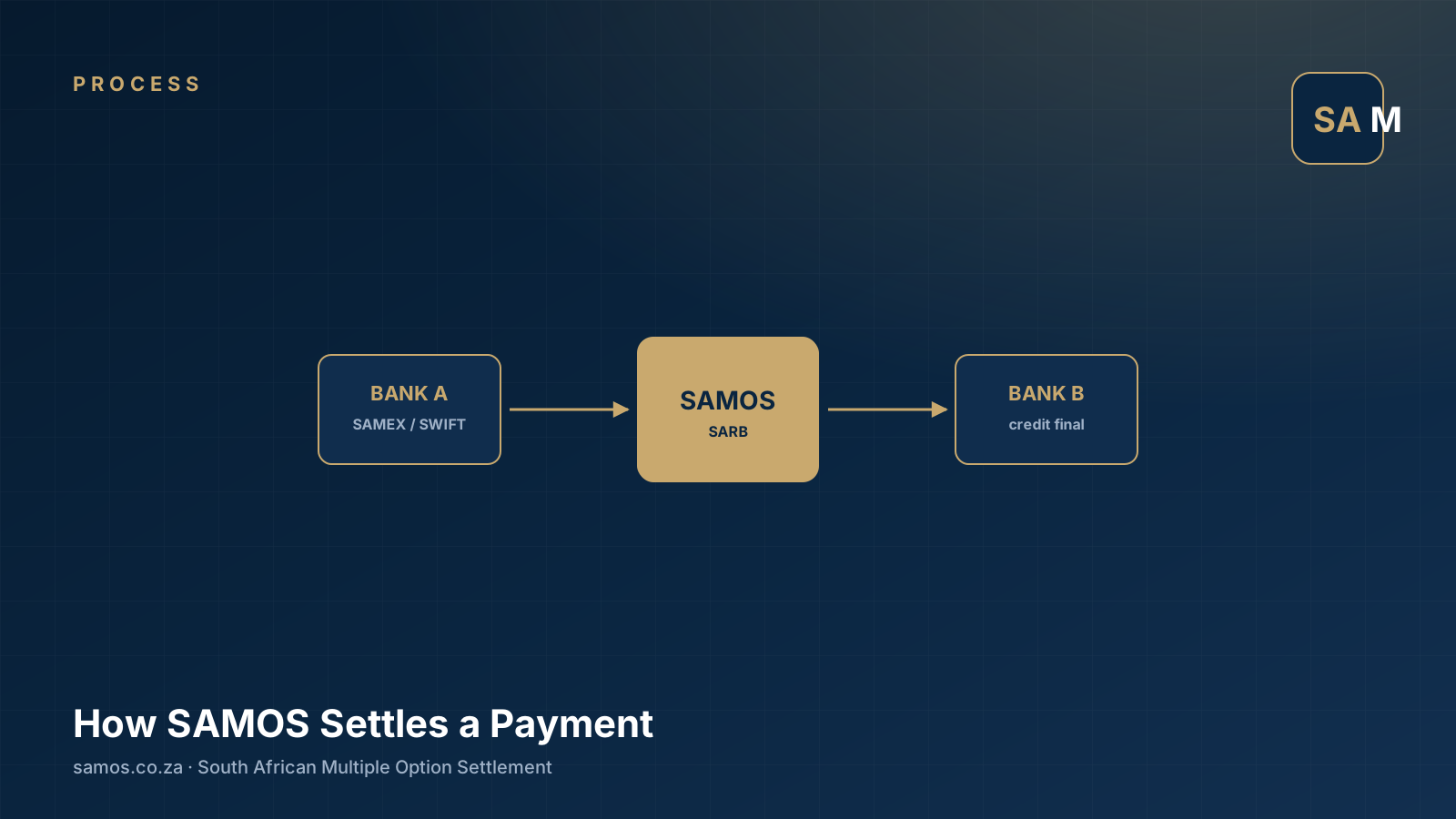
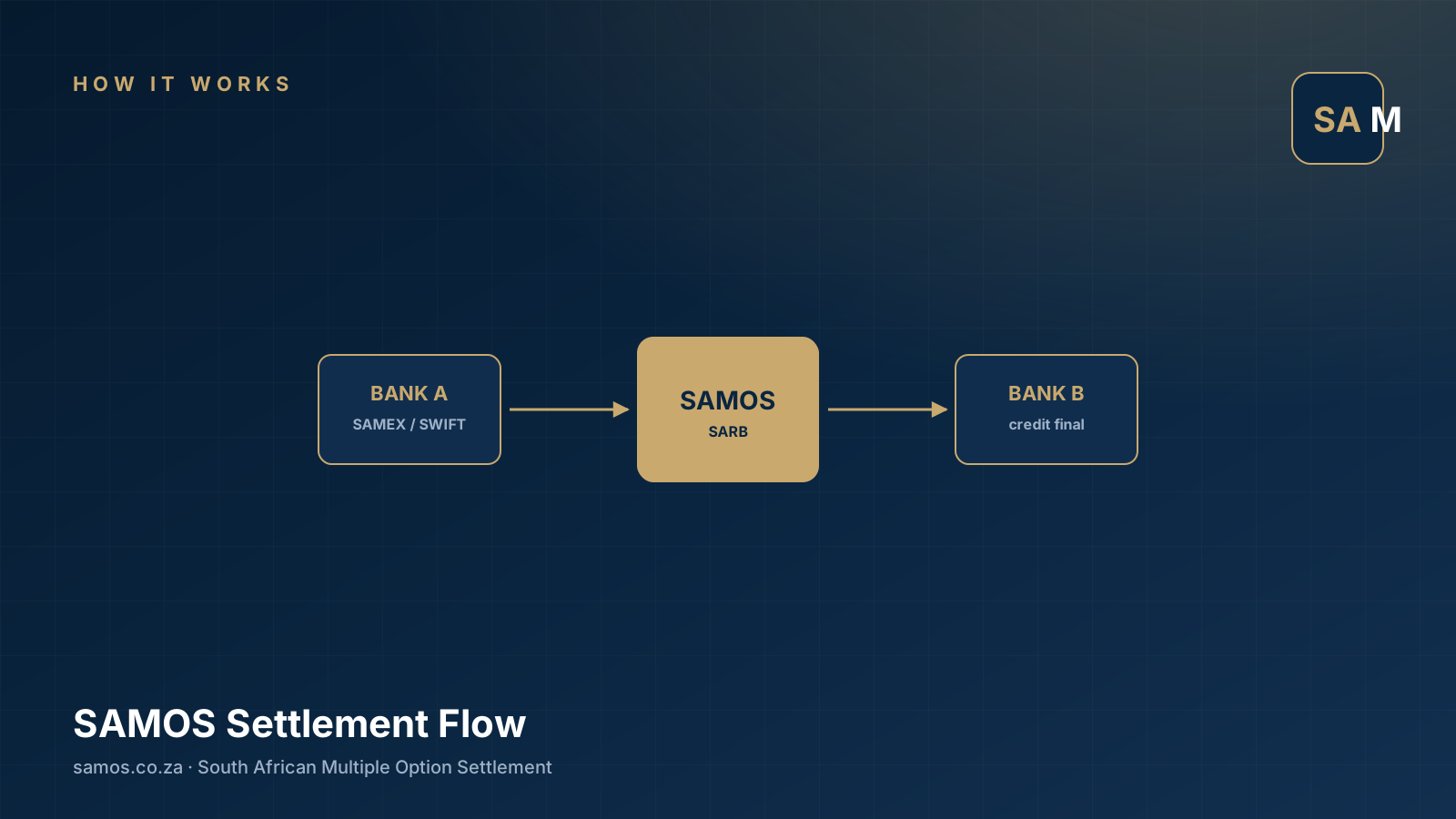
A simplified four-step view of the path a high-value interbank payment takes through SAMOS.
A participating bank captures a payment instruction in its core system and routes it to SAMOS via SAMEX or SWIFT.
SAMOS authenticates the message, checks Bank A's available balance, and queues the instruction if liquidity is short.
The amount is debited from Bank A's settlement account and credited to Bank B's account - all in central-bank money.
Bank B receives a confirmation message. The credit is final and irrevocable, and Bank B can act on the funds immediately.
A snapshot of how SAMOS differs from the retail and instant-payment rails most consumers see every day.
| Feature | SAMOS | PayShap | EFT (Credit) | Real-Time Clearing (RTC) |
|---|---|---|---|---|
| Settlement type | Real-time gross | Deferred net (in SAMOS) | Deferred net | Deferred net (in SAMOS) |
| Typical use | High-value interbank | Low-value instant (P2P) | Salaries, bills | Lower-value urgent |
| Speed for end user | Seconds | Under 10 seconds | Same-day / next-day | Within 60 seconds |
| Settlement asset | Central-bank money | Central-bank money (via SAMOS) | Central-bank money (via SAMOS) | Central-bank money (via SAMOS) |
| Operator | SARB | BankservAfrica | BankservAfrica | BankservAfrica |
Want a deeper comparison? See SAMOS vs PayShap, RTGS vs EFT, or Gross vs Net Settlement.
Plain-English deep dives into the rules, players, and machinery behind SAMOS and the wider National Payment System.
Unpacking the acronym, why each word matters, and how the “multiple option” part shows up in practice.
Read articleFollow a single payment from a bank's core system through SAMEX, into SAMOS, and onto its final destination.
Read articleDifferent problems, different rails - and why PayShap still ultimately depends on SAMOS to settle.
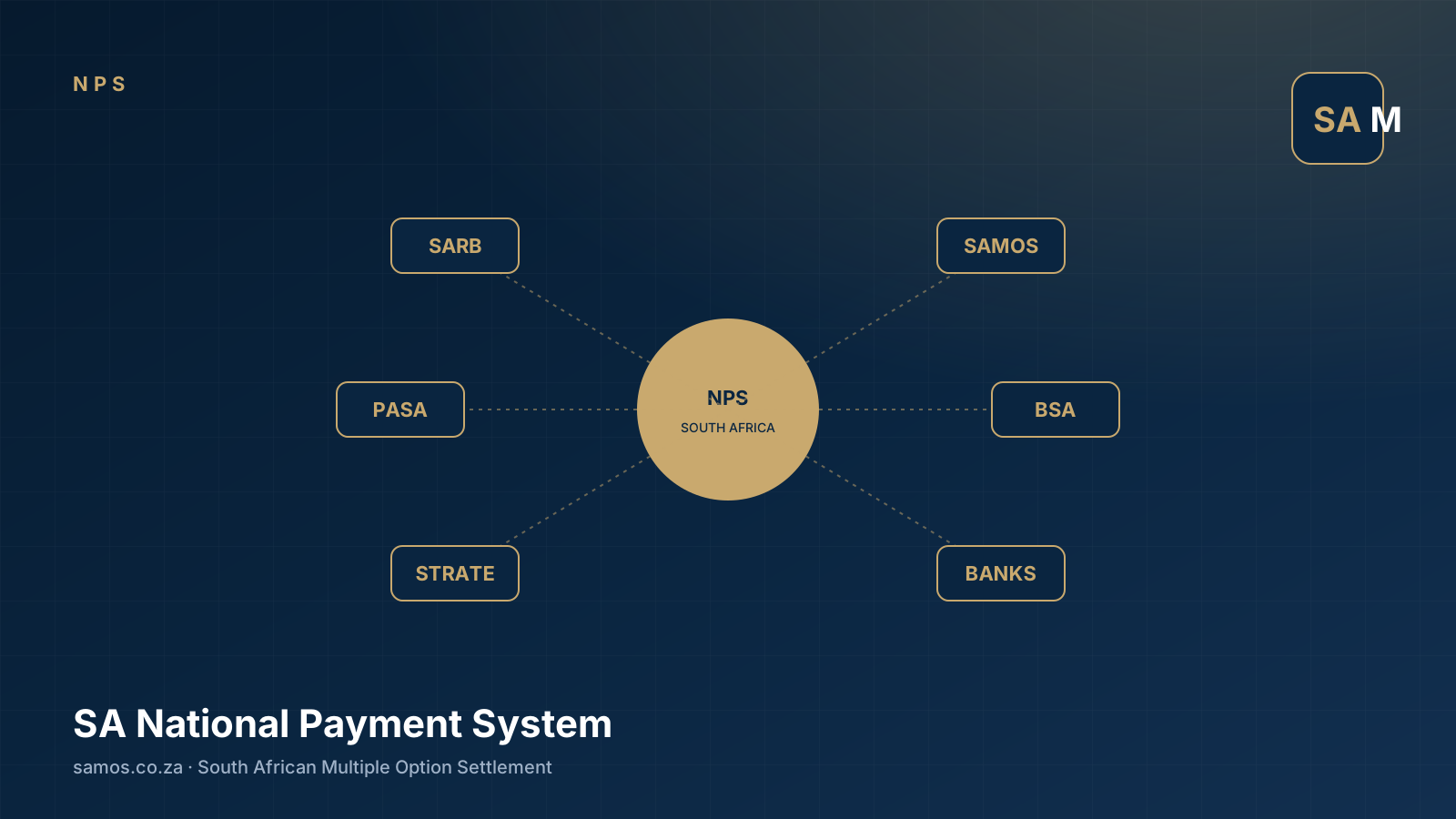
Read articleHow the SARB, PASA, BankservAfrica, and the settlement banks fit together - and where SAMOS sits.
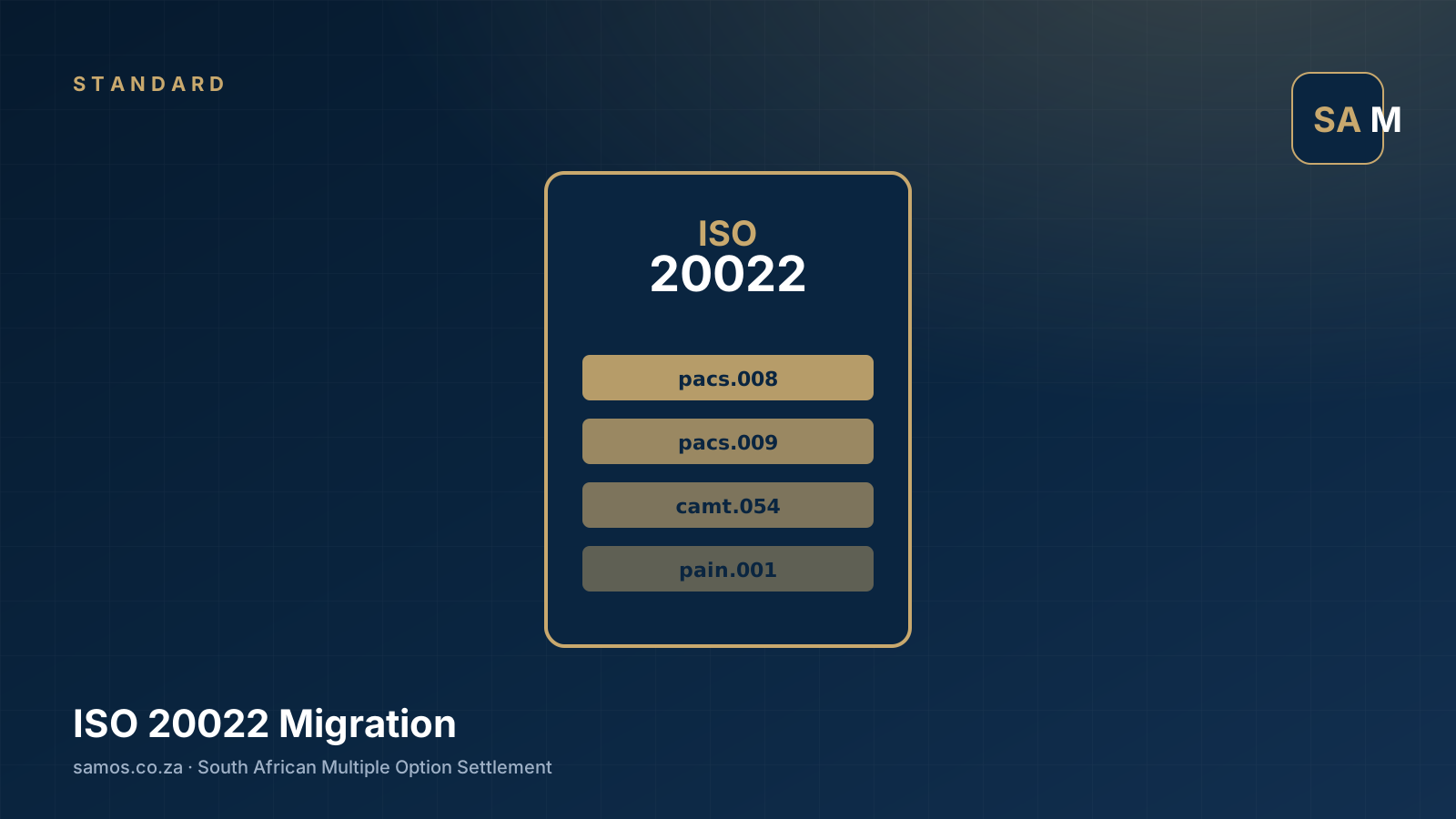
Read articleThe standard, the timeline, and what the migration changes for messaging, data quality, and interoperability.
Read articleThe daily cycle of cut-offs, batches, and end-of-day windows that keep South African settlement on the clock.
Read articleShort, source-grounded answers to the questions readers ask Google most often.
SAMOS - the South African Multiple Option Settlement system - is the real-time gross settlement (RTGS) platform operated by the South African Reserve Bank. It settles high-value, time-critical interbank payments between settlement participants on an irrevocable, pre-funded basis, and has been in production since 9 March 1998.
SAMOS is owned and operated by the South African Reserve Bank (SARB) through its National Payment System Department. SARB sets the rules, runs the infrastructure, and acts as the settlement agent for participating banks.
SAMOS stands for South African Multiple Option Settlement. The name reflects its support for multiple settlement methods, including RTGS, batch settlement for retail clearing houses, and securities settlement linked to STRATE.
Not quite. SAMOS is the platform; RTGS is one of the settlement methods it supports. In everyday South African usage the two terms are often used interchangeably, but technically SAMOS also handles batch and securities settlement.
SAMOS went live on 9 March 1998, replacing earlier paper-based and net-settlement arrangements and bringing South Africa in line with international RTGS standards.
SAMEX (SAMOS Exchange) is the messaging and front-end interface participants use to send settlement instructions to SAMOS. Most banks connect through SAMEX or via SWIFT, with SAMEX handling the participant-side workflow. See our SAMEX explainer for the detail.
SAMOS is being modernised, not retired in the short term. The SARB has launched the Payments Ecosystem Modernisation (PEM) Programme and an RTGS renewal initiative aligned with NPS Vision 2030+. ISO 20022 messaging is a central pillar of that programme. Our RTGS renewal article tracks the latest.
Direct SAMOS participation is currently restricted to settlement banks that meet SARB criteria. Non-banks generally access settlement indirectly through a sponsoring settlement participant. See Sponsored vs Direct Settlement.